Home › Walkway and Pathway Paving
Our asphalt walkway paving in Tulsa, OK creates clean, low maintenance paths that connect driveways, patios, and entrances. We design and pave smooth asphalt walkways that shed water and are easy to walk, push strollers, and roll carts on. Get a free quote for new residential paths and walkways today.
Precision Asphalt Tulsa provides professional asphalt walkway paving throughout Tulsa, OK, Oklahoma and the surrounding area. Our licensed, insured crew delivers safe, clean, on-time work with a free estimate before anything begins. Call (918) 703-4204 or request your free quote.
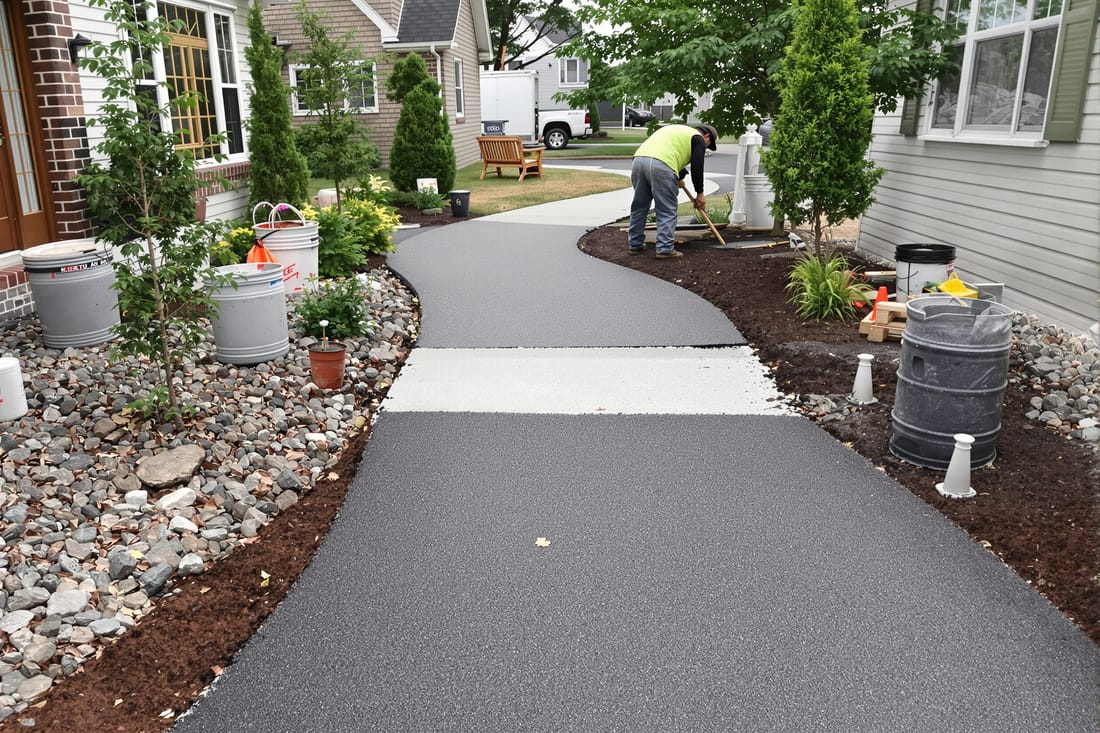
Asphalt Walkway Paving in Tulsa, Done the Right Way
If you are tired of cracked or muddy walkways around your home, business, or HOA, Precision Asphalt Tulsa can design and install asphalt paths that actually hold up to Tulsa weather and foot traffic. We focus on walkway and pathway paving that is safe, smooth, and easy to maintain, whether you need a curved garden path, a straight sidewalk to a parking lot, or a network of trails.
Our crew starts with a site visit, not a guess. We walk the route with you, look at drainage patterns, tree roots, and how people really move through the space. In Tulsa, that usually means planning for heavy downpours in spring and fall and plenty of summer heat. We note low spots where water is already pooling and recommend slope adjustments or extra drainage so you do not end up with puddles or ice patches right in the middle of the path.
For most residential and light commercial walkways, we recommend a 2 to 3 inch compacted asphalt surface on top of a properly built base. High traffic areas such as school campuses, apartment complexes, or park trails may need a thicker section or stronger base rock. We explain these options in normal language and price out each choice so you know exactly what you are getting before we roll in equipment.
How We Build Long‑Lasting Asphalt Walkways and Paths
Quality walkway paving in Tulsa starts under the asphalt. After layout and marking utilities, we strip off any grass, old concrete, or broken asphalt along the planned route. If the existing soil is soft or holds water, our crew may undercut and replace several inches with compacted aggregate base, typically a graded rock that locks together under compaction. This is one of the biggest factors in how long your new path will last.
Once the subgrade is shaped, we install the base rock to the specified depth, usually 3 to 6 inches for walkways. Using a vibratory plate or roller, we compact in multiple passes until we reach the right density. You will see us check thickness and cross slope as we go. For ADA‑sensitive routes, like paths from parking to building entrances, we pay close attention to maximum slope limits so the finished walk is comfortable to use.
Next comes the asphalt layer. For walkways and pathways, we typically use a fine graded mix that compacts to a tight, smooth surface with fewer visible stones than a parking lot mix. This is easier on shoes, strollers, wheelchairs, and bikes. We lay the asphalt while it is hot, work it with rakes along edges and tight curves, then compact it with a roller or plate compactor to lock the stone and asphalt binder together. Edges are carefully finished so they will not crumble when they meet grass, mulch, or landscaping.
At the end, we walk the project with you. We point out any spots that may need extra attention, review where water will flow, and go over curing and use instructions so the walkway gets a strong start.
Design Options for Your New Walkway or Pathway
Walkway and pathway paving is not one‑size‑fits‑all. At Precision Asphalt Tulsa, we help you match the look and layout of the path to how it will be used. Straight, efficient walks are great for commercial entries, while gentle curves work better along landscaping beds or around play areas.
In many Tulsa neighborhoods, customers choose a 3 to 4 foot wide asphalt walkway for side yards or access routes around the house, and a 5 foot or wider path for shared use, like HOA common areas or church campuses. Wider paths prevent people from wearing a second dirt trail next to the pavement when they pass each other. For park and trail systems, we often recommend 8 feet or more, so walkers, runners, and bikes can coexist without conflict.
You can also choose contrasting borders. Some property owners like a clean asphalt edge that meets grass. Others add a concrete, brick, or metal edging strip along the sides to keep mulch and soil off the pavement and to give the walkway a more finished, architectural look. We coordinate with your landscaper if needed so the path, plants, and lighting work together.
Surface treatments are another option. Standard black asphalt starts deep black and weathers to dark gray over time. For walkways with a lot of sun exposure, we may suggest a sealcoat after the first year, which helps protect against UV and minor surface wear. On steep sections, we can use slightly more textured mixes or add scoring at transitions to improve traction when it rains.
What Affects Cost and Timing for Asphalt Walkway Paving in Tulsa
Customers often ask what drives the price for asphalt walkway paving. The biggest factors are layout complexity, site conditions, and thickness. A straight 60 foot walkway across level ground with firm soil is far less expensive per foot than a winding 200 foot garden path that snakes around existing trees, irrigation, and patios.
Subgrade issues are another major cost driver. If your yard stays soggy after storms or if we find soft clay pockets during excavation, we may need more base rock and compaction work to keep the path from settling or cracking. We will show you these conditions on site and explain the difference between a minimal fix and a long term fix so you can decide how much to invest.
Access matters too. If our crew can bring a small paver and roller right to the work area, production is faster and labor is lower. For tight backyards in older Tulsa neighborhoods or between buildings downtown, we sometimes have to use smaller equipment and handwork more of the path. That adds time and labor, which we factor into the estimate.
In Tulsa, the best seasons for walkway paving are typically March through early June and late September through early November, when temperatures are moderate and rain is less extreme. We can pave in summer, but we schedule earlier in the day to avoid the worst heat, which affects both crew safety and how quickly asphalt cools. In winter, we have to watch overnight lows. If it is too cold, the asphalt can cool too fast to compact properly.
We provide written estimates that break out preparation, base work, asphalt paving, and any extras such as edging, drainage improvements, or tie‑ins to existing concrete. That way you can compare options and make adjustments before we start.
Common Issues, Maintenance, and How Precision Asphalt Tulsa Helps
Walkways and pathways face a different set of problems than driveways. They are narrower, often closer to trees and landscaping, and more likely to cross sprinkler lines. At Precision Asphalt Tulsa, we try to spot these issues before they become headaches.
Tree roots are one of the biggest threats to paved paths in Tulsa. Instead of just paving over roots, we look at root patterns and either gently reroute the path or excavate and install a thicker base section that bridges small roots. For large, shallow roots near valuable trees, we may recommend adjusting the alignment a few feet to protect both the tree and the pavement. We can also coordinate with an arborist if needed.
Drainage is another concern. A walkway that traps water at one or two spots will deteriorate faster and can grow algae or moss, which becomes slick. When we design your path, we include a slight cross slope so water runs off, and we may add shallow swales or French drains next to the paved surface if your yard is particularly flat. For paths tying into downspouts, we can add splash blocks or underground piping so roof water does not beat up the pavement.
Ongoing maintenance for asphalt walkways is simple but important. For the first few days, we recommend keeping heavy items like dumpsters or construction materials off the new surface and avoiding sharp turning of heavy carts in one spot. After the first year, sealcoating every few years helps slow oxidation and hairline cracking, especially in our hot Oklahoma summers. We also suggest keeping edging trimmed so grass does not grow over the asphalt, which can trap moisture at the edges.
If you already have an older asphalt path that is cracked or uneven, we can evaluate whether resurfacing will work or if full replacement is smarter. Hairline and small block cracks can often be sealed and then covered with a thin overlay, while deep alligator cracking or settled areas usually mean the base has failed. In those cases, we cut out and rebuild only the damaged sections when possible, which saves money compared to tearing out the entire walkway.
From first walk‑through to final cleanup, our goal is to build walkways and pathways that look natural on your property and stay functional for years with minimal hassle.