Home › Asphalt Striping and Pavement Markings
We handle asphalt striping in Tulsa, OK to keep parking lots safe, organized, and compliant. Our team lays out parking stalls, ADA spaces, fire lanes, and directional arrows with bright, durable paint. Get a free estimate for new parking lot striping or restriping today.
Precision Asphalt Tulsa provides professional asphalt striping throughout Tulsa, OK, Oklahoma and the surrounding area. Our licensed, insured crew delivers safe, clean, on-time work with a free estimate before anything begins. Call (918) 703-4204 or request your free quote.
Asphalt Striping in Tulsa That Works in the Real World
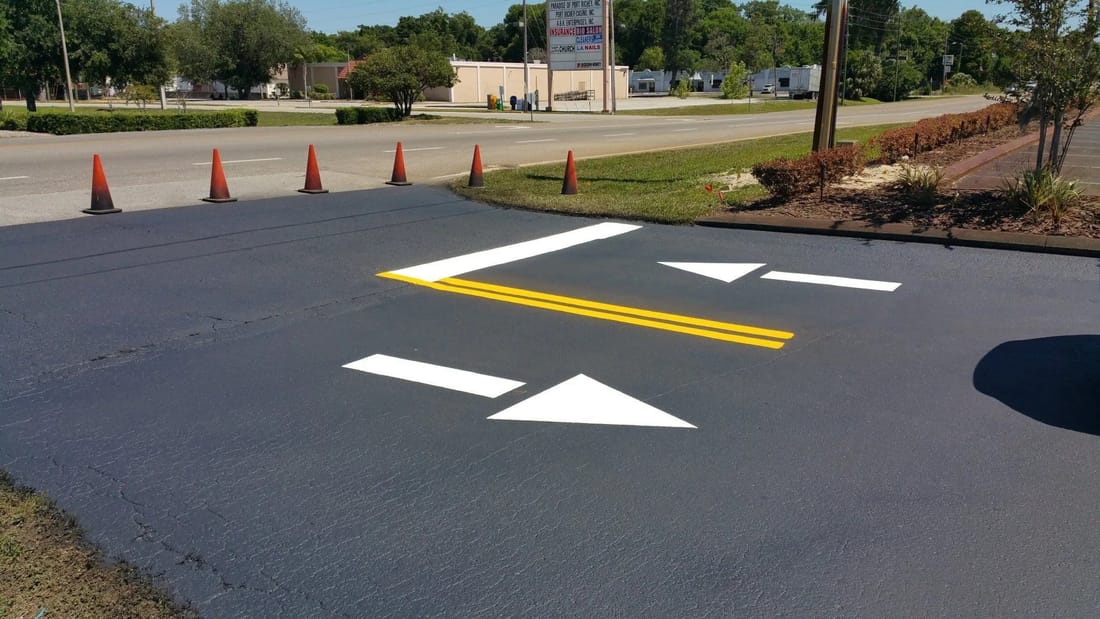
When you pull into a lot, you can tell in seconds if the striping was done right. At Precision Asphalt Tulsa, our asphalt striping and pavement markings are laid out so your customers, tenants, and delivery drivers know exactly where to go, and so you stay on the right side of ADA and fire code rules in Tulsa.
We start every striping job with a walkthrough. We look at how people actually use your parking lot or drives, not just what the old lines show. We check traffic flow, choke points, and where cars are already cutting corners. Then we compare that to the City of Tulsa requirements, ADA guidelines, and, if you are in a shopping center, any shared easement or property management rules that affect stall counts or fire lanes.
From there, we create a striping plan that covers stall layout, ADA spaces, access aisles, crosswalks, stop bars, direction arrows, and any specialty areas like loading zones or drive‑thrus. If you already have a layout, we can match it. If you need changes, we sketch out options right on site and talk through what makes sense for traffic and code compliance. The goal is simple: lines that look sharp, hold up to Tulsa weather, and keep you out of trouble with inspectors and insurance carriers.
How We Actually Do Asphalt Striping and Marking
Real striping work is more than putting paint on blacktop. Before we ever open a paint can, we prep the surface. We use power blowers to remove dust and grit, then we scrape or grind off loose old paint where it is built up so the new markings sit flat. On greasy or heavily stained areas, especially around restaurant dumpsters and drive‑thru lanes, we degrease first so the paint can bond to the asphalt.
Next, we snap chalk lines or use a laser layout to keep everything straight and to the right width. Standard parking stalls are typically 9 feet wide in Tulsa commercial lots, but we adjust based on your zoning, intended use, and any existing striped areas you want to match. For ADA stalls, we mark the wider spaces and access aisles to match federal guidelines and local enforcement practices.
We use professional striping machines with adjustable guns to control line width and paint volume. For most parking lots we use high‑solids, waterborne traffic paint that dries fast in Oklahoma heat and meets local VOC requirements. On high‑traffic or revenue‑generating lots, like medical offices or retail centers, we often recommend adding glass beads to certain markings like stop bars or crosswalks to increase night visibility when headlights hit them.
After striping, we block off the area with cones and caution tape. In Tulsa's typical warm months, we usually ask drivers to stay off fresh lines for at least 30 to 60 minutes, and a bit longer for heavy truck traffic. In cooler or more humid weather, we extend that cure time so the markings do not scuff or peel. Before we leave, we walk the job with you to confirm stall counts, ADA locations, and any custom logos or text are correctly placed and easy to read.
Material Options, Layout Choices, and Tulsa‑Specific Requirements
Not every lot or driveway needs the same striping materials. At Precision Asphalt Tulsa, we match products and layouts to how your pavement is used and what Tulsa regulators expect. For most small to medium commercial lots, high‑quality traffic paint is the right balance of cost and durability. For industrial facilities, schools, and hospitals, we may recommend more durable systems in key areas, like multiple coats or, when appropriate, thermoplastic for crosswalks and stop bars that see constant wear.
We also pay close attention to color choices. Standard white and yellow handle most parking stalls and lane lines. Red is used for fire lanes and no‑parking zones, which is important because Tulsa Fire Marshal inspections often look specifically at whether fire lanes are properly marked and labeled. Blue backgrounds, along with the correct ADA symbols and hash marks, are required for accessible parking. We follow current ADA and Oklahoma accessibility guidelines when we lay these out, including van‑accessible signage locations.
Layout choices affect how many cars you can park and how easy it is to drive the lot. Straight parking is simpler and cheaper to lay out and stripe. Angled parking can work better in tight Tulsa infill lots or one‑way drive aisles because it guides traffic in one direction and can make backing out safer. We help you weigh stall count, traffic flow, and truck or trailer movements if you have loading or service areas.
For properties in homeowners associations or managed commercial parks, we review any published design standards before we paint. Many Tulsa HOAs and property managers specify exact colors, line widths, and even the wording and size of fire lane text. Getting these details right up front prevents you from having to pay to re‑stripe when an association walk‑through finds non‑conforming markings.
What Drives Cost and Common Striping Problems We Fix
Asphalt striping cost is driven by a few main factors: size of the job, complexity of the layout, how much old striping needs to be removed or blacked out, and whether we are striping new asphalt or restriping an old pattern. A simple restripe on a clean, newer lot is the most economical. A full re‑layout with stall changes, ADA upgrades, and removal of old markings takes more time, measuring, and materials.
If you have old lines that no longer match your traffic plan, we can either black them out with a compatible asphalt sealer or mechanically grind them off. On busy Tulsa streets, like access drives on Memorial or 71st, grinding is often better because heavy traffic can scuff blackout paint and reveal the old lines, which confuses drivers and can create liability issues.
We also see problems from past striping jobs that we fix: double‑wide or crooked spaces that reduce your stall count, non‑compliant ADA stalls with missing access aisles, and faded fire lane markings that could fail an inspection. In some cases we correct drainage‑related issues by shifting stall layouts slightly away from low spots or cracks so that paint is not constantly sitting in water, which makes it fail faster.
Weather is another cost and quality factor in Tulsa. In the heat of summer, we plan work earlier or later in the day so the paint does not flash dry before bonding properly. During wet seasons, we watch the forecast closely to avoid striping right before a storm that could wash lines away. We schedule work in phases for busy businesses so you can keep part of your lot open while we stripe another section, which avoids losing a full day of parking revenue.
What Tulsa Property Owners Should Know Before Hiring a Striper
Before you hire anyone for asphalt striping in Tulsa, there are a few things to check so you get lasting results and avoid compliance headaches. Ask what type of paint or marking material they plan to use and why. You want traffic‑grade coatings that meet current standards, not leftover house paint that will be gone after one Oklahoma summer.
Make sure the contractor understands ADA requirements and local fire lane rules. This includes how many accessible spaces you need, where they should be located relative to entrances, the width of access aisles, and the wording and placement of fire lane text along curbs or drive lanes. At Precision Asphalt Tulsa, we review your current layout, recommend any updates needed for compliance, and can coordinate with your property manager if you are part of a larger development.
You should also ask for a detailed layout or at least a clear description of what is being striped: number of stalls, ADA spots, crosswalks, arrows, loading zones, and any custom lettering like reserved parking or visitor spaces. This avoids surprises and ensures you know exactly what you are paying for. For larger projects, we can mark key locations with temporary chalk first so you can see how the traffic will flow.
Finally, plan timing. For retail and restaurant locations near busy Tulsa corridors, we often stripe overnight or early morning so business is not interrupted. For schools, churches, and multifamily properties, we schedule around events and peak parking times. We provide clear guidance on how long to keep vehicles off fresh markings and where to place temporary barriers if you need to open a section sooner. By planning ahead, you get sharp, durable striping that looks professional, keeps people safe, and helps your pavement investment last longer.