Home › Commercial Asphalt Resurfacing & Overlays
Our commercial asphalt resurfacing in Tulsa, OK restores worn parking lots and drive lanes with smooth overlays that extend pavement life. We repair failed areas, mill as needed, and apply a new asphalt layer that improves ride quality and appearance. Request a free resurfacing evaluation for your property today.
Precision Asphalt Tulsa provides professional commercial asphalt resurfacing throughout Tulsa, OK, Oklahoma and the surrounding area. Our licensed, insured crew delivers safe, clean, on-time work with a free estimate before anything begins. Call (918) 703-4204 or request your free quote.
Commercial Asphalt Resurfacing for Tulsa Properties
Commercial asphalt resurfacing and overlays are often the most cost‑effective way to restore a worn parking lot, drive lane, or private street without paying for a full tear out. Precision Asphalt Tulsa focuses specifically on commercial properties in Tulsa and surrounding Oklahoma communities, so our recommendations are based on how local pavements actually age under our freeze–thaw cycles, red clay soils, and heavy summer heat.
Resurfacing typically involves adding a new asphalt layer over your existing pavement after repairing structural issues. Overlays can extend the life of your lot by 8 to 15 years if the base is sound, which is often the case for shopping centers, office parks, industrial yards, and churches that were built correctly but have not been maintained recently. Our team evaluates traffic patterns, turning movements, and drainage on your site so the overlay is designed to handle your specific use, not just look black and new for a year or two.
Property managers in Tulsa call us when the surface is cracked, rutted, and faded, but full‑depth replacement would strain the budget or require too much downtime. In many of these situations, a properly engineered commercial asphalt resurfacing project achieves nearly the same performance at a fraction of the cost of new construction.
Step‑by‑Step: How Our Resurfacing & Overlay Process Works
Every commercial asphalt resurfacing job at Precision Asphalt Tulsa follows a disciplined process so you know exactly what will happen on your property and when.
1) Detailed site inspection: We walk the entire lot or roadway, probe soft areas, and identify structural failures, drainage problems, and subgrade issues. We map out crack patterns, rutting, and areas of standing water so the overlay design is based on real conditions instead of guesswork.
2) Core sampling when needed: For larger commercial sites or when we suspect base problems, we take core samples to measure existing asphalt thickness and verify the strength of the base rock. This helps decide if resurfacing alone is appropriate or if partial reconstruction is necessary in certain lanes or loading areas.
3) Milling and transitions: Before placing new asphalt, we mill (grind) the existing surface in key areas. This includes tie‑ins at entrances, around dumpster pads, at ADA ramps, and along concrete gutters. Milling ensures the new overlay does not create trip edges or drainage dams at your Tulsa site.
4) Structural repairs: We cut out and replace failed sections with new base aggregate and full‑depth asphalt. Wider alligator cracked zones, depressions where trucks sit, and oil‑soaked areas are fixed before overlaying to prevent those defects from reflecting through the new mat.
5) Cleaning and tack coat: We blow and sweep the surface thoroughly, then apply a tack coat to bond the new asphalt to the old. Proper tack application is one of the keys to overlay performance in Oklahoma’s temperature swings.
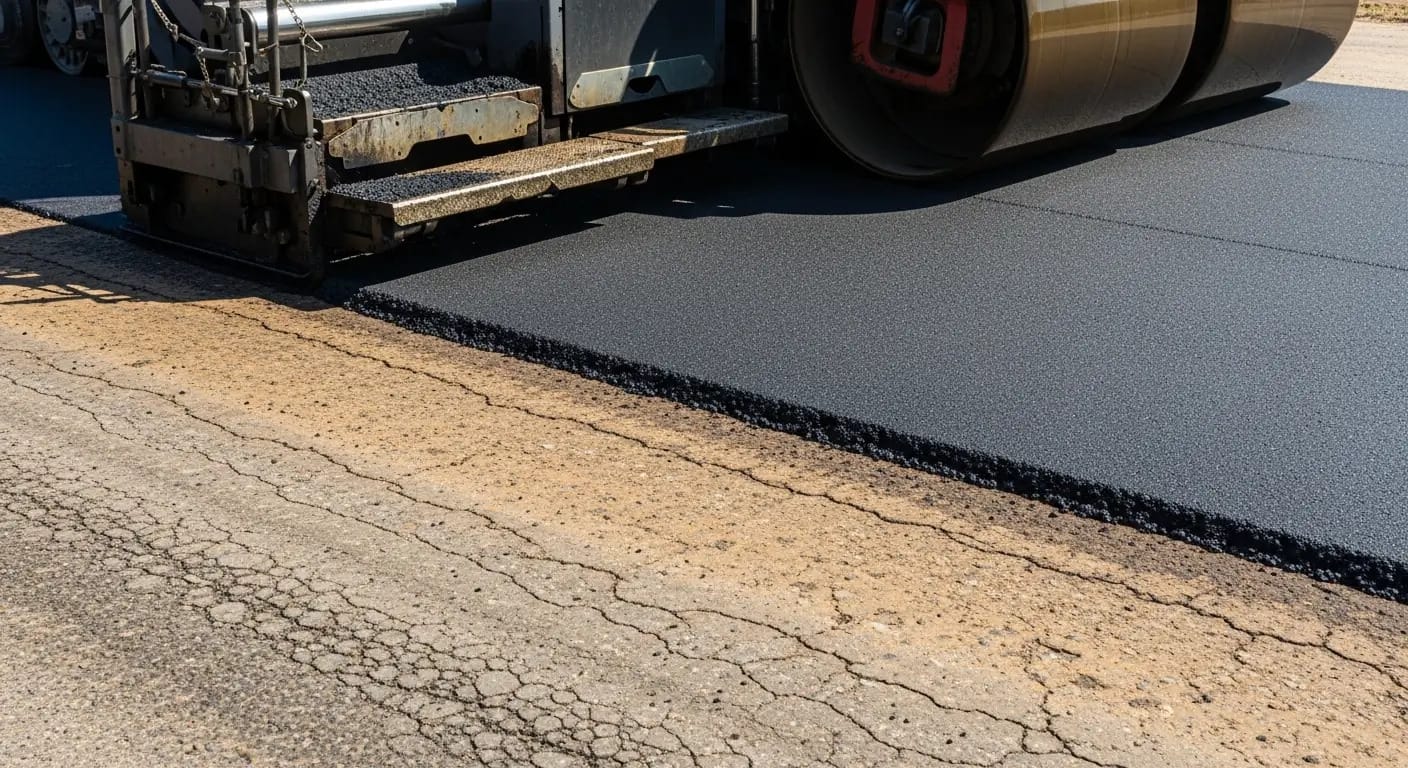
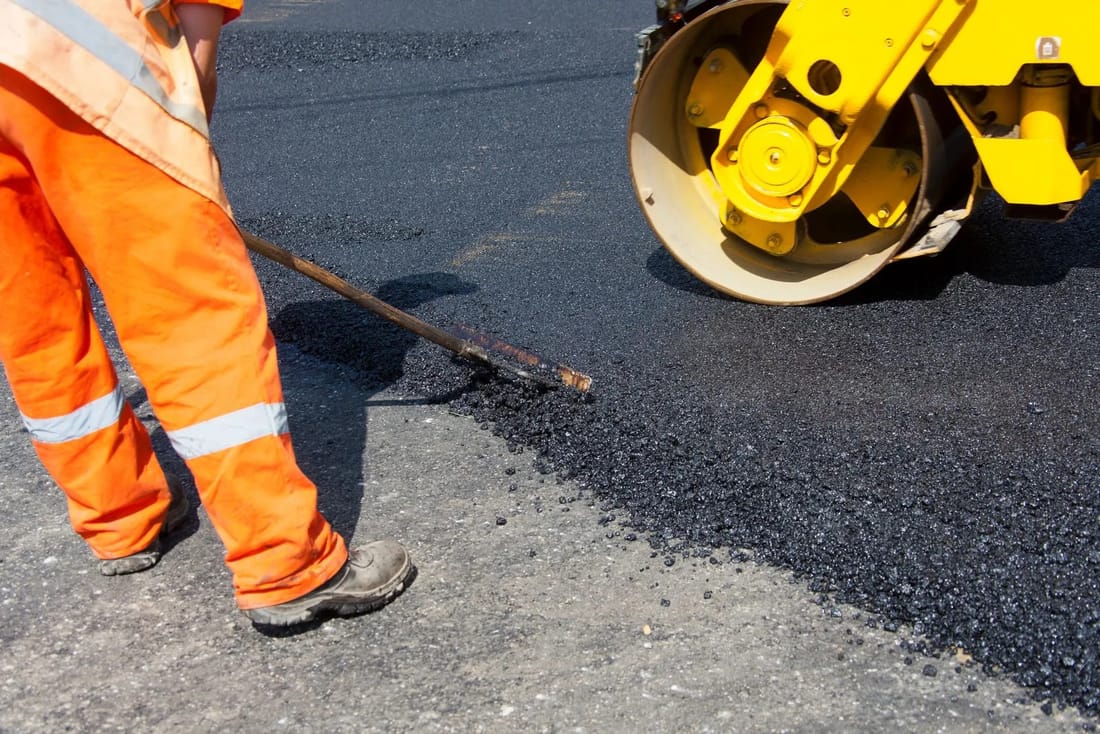
6) Paving the overlay: Using commercial pavers and steel drum rollers, we install your new asphalt overlay in one or more lifts, depending on thickness. We set compaction targets to reach the density needed for your traffic level and verify results in the field.
7) Joint sealing, striping, and cleanup: Once compacted, we seal critical joints, stripe the lot to Tulsa and ADA standards, and open lanes in phases so your tenants and customers can keep using the property as much as possible.
Material & Design Options Tailored to Tulsa Traffic
Commercial asphalt resurfacing is not one‑size‑fits‑all. Precision Asphalt Tulsa selects mixes and designs overlay thickness based on how your pavement is actually used and what our climate throws at it.
For shopping centers and retail plazas, we typically recommend a 1.5 to 2 inch overlay in parking fields with a slightly thicker section in drive lanes and at entrances where vehicles turn and brake. For industrial yards, truck courts, and warehouse docks, overlays are often 2 to 3 inches, and we may use a mix with a higher stone content for rut resistance under tractor‑trailers.
In Tulsa, we pay close attention to surface texture and void content so water does not sit on the pavement and accelerate freeze–thaw damage. Where drainage is marginal, we may introduce subtle profile changes in the overlay to direct water to inlets or outside edges without creating abrupt slopes.
Your material options typically include standard hot‑mix asphalt, heavier‑duty commercial mixes, and in some cases polymer‑modified surface courses for high‑stress areas like tight turning radii in drive‑thrus. We explain the expected lifespan and cost difference for each, then design a plan that matches the way your property generates wear, not just a generic square‑foot recommendation.
What Drives the Cost of Commercial Asphalt Resurfacing
Many Tulsa property owners want to understand why bids for commercial asphalt resurfacing can differ. Precision Asphalt Tulsa breaks costs down so you can compare proposals on more than just the bottom line.
Key cost drivers include:
Existing pavement condition: Lots with isolated failures and minor cracking require less milling and patching than pavements with widespread structural issues. More base repair means more labor, materials, and time.
Overlay thickness: A 1.5 inch overlay uses far less asphalt per square yard than a 3 inch overlay. Heavier truck traffic and severe rutting often require thicker sections, which raises material costs but significantly extends life.
Milling and profile adjustments: Simple edge milling at entrances is inexpensive. Correcting poor drainage or high spots across an entire lot with machine milling is more involved but may prevent costly water damage later.
Layout and phasing: Active properties such as medical offices or distribution centers may need night or weekend work, tight phasing, and additional traffic control. That extra planning keeps your business operating but affects project cost.
Access and obstacles: Islands, light poles, loading docks, and tight drives slow down production. We account for handwork and smaller machinery where large pavers cannot operate efficiently.
When we prepare a proposal, we spell out how much area will be milled, how many square yards will be patched, and the exact overlay thicknesses by zone so you can see what you are paying for and why.
Common Surface Problems & How Resurfacing Solves (or Cannot Solve) Them
Not every pavement issue can be solved with a simple overlay. Precision Asphalt Tulsa evaluates your lot honestly so you do not spend resurfacing dollars on a surface that really needs reconstruction.
Issues well suited to commercial asphalt resurfacing include:
• Oxidized, gray, and rough surfaces where asphalt binders have aged but the base is firm.
• Moderate longitudinal and transverse cracking that can be sealed or bridged with a new mat.
• Shallow rutting from cars and light trucks, particularly in Tulsa parking fields that have never been milled or overlaid before.
Problems that often require more than just an overlay:
• Deep structural failures, such as pumping or deflection when trucks turn, which signal base or subgrade problems.
• Chronic standing water that is clearly tied to poor grades or missing drainage infrastructure.
• Severe alligator cracking over large areas, which usually indicates full‑depth fatigue.
On many commercial properties, the answer is a combination approach. We might fully rebuild heavy truck lanes or dumpster pads, then overlay the rest. This hybrid method controls costs while solving the root causes of failure in high‑stress zones. We explain these distinctions on site so you are clear where resurfacing is appropriate and where it would be a short‑term patch only.
Local Conditions in Tulsa That Affect Your Overlay
Tulsa’s specific environment plays a major role in how we design and install commercial asphalt resurfacing. Precision Asphalt Tulsa has seen how local weather and soil conditions affect pavement performance over decades.
Our region experiences frequent temperature swings, summer heat that softens poorly compacted overlays, and winter freeze–thaw cycles that exploit any weak joints or drainage deficiencies. This is why we stress proper compaction, uniform tack coat coverage, and careful joint construction along seams, curb lines, and concrete tie‑ins.
Tulsa’s clay subgrades expand when wet and contract when dry. Where we suspect movement in the base, we may recommend fabric interlayers or more aggressive base repairs before overlaying, especially on older commercial sites along the Arkansas River or low‑lying areas with historically poor drainage.
We also schedule and phase work with local weather patterns in mind. We avoid placing thin overlays on cold, damp surfaces, and we coordinate around your peak traffic hours so newly paved sections have time to cool and gain strength before they are loaded by vehicles. This local familiarity helps avoid problems that can shorten overlay life, such as early rutting or slippage during hot spells.
What Tulsa Owners Should Ask Before Hiring an Asphalt Resurfacing Contractor
When you are considering commercial asphalt resurfacing, the questions you ask your contractor will determine the quality of the result more than the logo on the truck. Precision Asphalt Tulsa welcomes detailed questions and provides clear answers before any work starts.
Here are key points to cover with any bidder:
• How did you determine that resurfacing is appropriate instead of full‑depth reconstruction in each area of my lot?
• What overlay thickness are you proposing in drive lanes, parking stalls, and loading zones, and why?
• How much milling will you perform, and where, to maintain smooth transitions and proper drainage?
• What mix designs will you use, and how are they suited to Tulsa traffic and climate conditions?
Ask to see a phasing plan that shows how the contractor will maintain access for tenants, customers, and deliveries. For medical, retail, and industrial sites in Tulsa, we typically build a map that labels which sections will be closed each day and coordinate with tenants so everyone knows where to park.
Finally, confirm that compaction testing or density checks will be performed, and that the contractor will return to address any post‑project issues like ponding or raveling along joints. A well‑planned commercial asphalt resurfacing project should give you a predictable lifespan, not surprises a year later, and that is the standard we work to on every property we resurface.