Home › Parking Lot Repair & Replacement
We offer comprehensive parking lot repair in Tulsa, OK to fix potholes, failed areas, and trip hazards before they hurt customers or vehicles. When lots are worn out, our team can mill or remove old asphalt and install a new surface with proper grading. Schedule a free commercial parking lot inspection and estimate today.
Precision Asphalt Tulsa provides professional parking lot repair throughout Tulsa, OK, Oklahoma and the surrounding area. Our licensed, insured crew delivers safe, clean, on-time work with a free estimate before anything begins. Call (918) 703-4204 or request your free quote.
Parking lot repair in Tulsa that actually fixes the root problem
If you manage a commercial property in Tulsa, you already know our weather is tough on parking lots. One winter freeze after a warm rain, or one hot July week of 100-degree days, and small cracks can quickly turn into potholes and trip hazards. Precision Asphalt Tulsa focuses on parking lot repair that addresses the cause of the damage, not just the surface.
When you call us, we start with a walk-through of your lot. We look at how water drains, where vehicles turn and brake the most, and what kind of base you have under the asphalt. In Tulsa we see a lot of issues from poor drainage along 71st Street and in older shopping centers around Midtown. Water sitting in low spots and around drains weakens the base, which leads to sinking areas, alligator cracking, and recurring potholes.
We check for:
• Alligator cracking that looks like broken glass, which usually means the base or subgrade is failing.
• Isolated potholes or utility cuts that can be patched without replacing whole sections.
• Depressions where water stands more than 24 hours after a rain.
• Long linear cracks along joints or previous patch seams.
Based on what we find, we will explain whether simple asphalt patching, mill and overlay, or full-depth replacement is the right choice. Our goal is to show you which areas really need investment and which can be maintained more cost effectively so you can budget realistically for the next 3 to 10 years.
How Precision Asphalt Tulsa actually repairs parking lots
Parking lot repair usually falls into three main categories: crack sealing, patching, and overlay. On many Tulsa properties we use a mix of all three. Here is what that process really looks like in the field.
Crack sealing: For working cracks about 1/4 to 1 inch wide, we clean them with compressed air or a crack router so there is no vegetation or loose debris. Then we heat and apply a hot rubber crack sealant that flexes with the pavement. This is especially important in Tulsa because our temperatures swing from winter freezes to 100-degree summers, which makes untreated cracks expand and let in water.
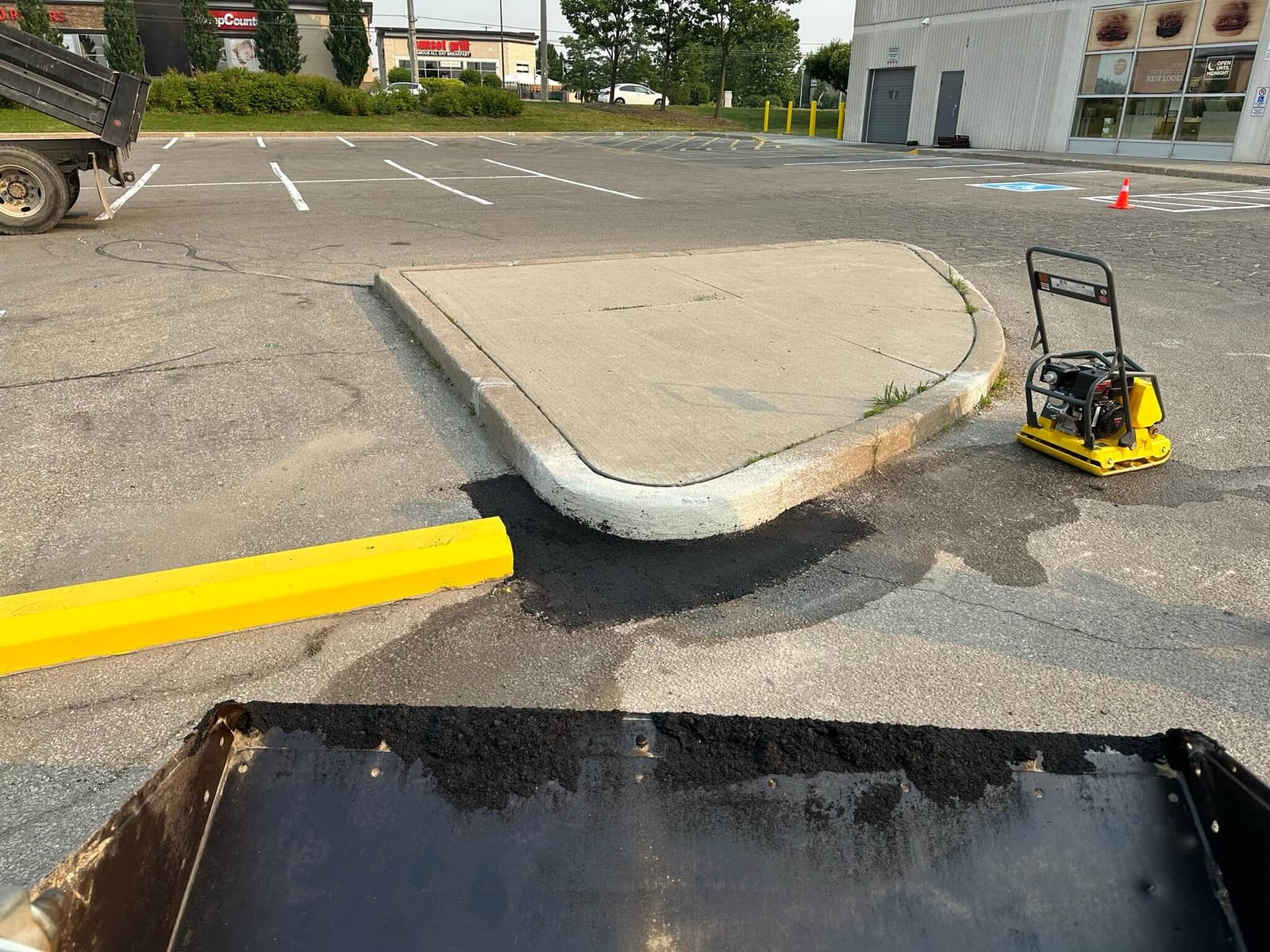
Pothole and failed area patching: For potholes, we square up the hole with a saw or milling attachment so the sides are vertical and stable. We remove the loose asphalt and inspect the base. If the base is soft or pumping mud, we dig down to firm material, then rebuild the base with compacted aggregate. Only then do we place hot-mix asphalt in lifts (usually 2 to 3 inch layers), compact each lift with a plate compactor or roller, and seal around the edges to keep water out.
Skin patch vs full-depth patch: Sometimes customers ask for the cheapest patch, which is a thin surface patch over a weak base. We will explain when that is likely to fail early. In drive lanes or truck routes around warehouses near the I-44 and Highway 169 corridor, we strongly recommend full-depth patches that repair the base and asphalt together, since those areas see constant heavy traffic.
Overlay (mill and overlay): If 20 to 40 percent of the lot is in rough shape but the base is generally sound, we may mill off the top 1 to 2 inches of asphalt, repair the worst spots, then place a new surface course. This refreshes the look of the lot and removes widespread cracking while using your existing structure. For many Tulsa retail centers this is the most cost effective way to get another decade out of your parking lot.
When repair is not enough and it is time for parking lot replacement
At some point, repairing the same failing areas every year costs more than starting over. Precision Asphalt Tulsa is candid about that tipping point because full parking lot replacement is a big investment and you deserve straight answers.
We usually recommend full-depth replacement when:
• More than 40 to 50 percent of the lot has alligator cracking or repeated patches.
• The surface has extensive rutting in drive lanes, especially where delivery trucks turn or stop.
• There are chronic drainage problems that cannot be solved with patching or overlay alone.
Our replacement process starts with planning. We review traffic flow, dumpster and loading zones, ADA access, and Tulsa stormwater requirements so the new layout works better than what you had. If needed, we coordinate with you to phase the work so customers and tenants always have a way in and out, which is crucial for busy shopping centers and medical offices.
For a full replacement, we typically:
1. Mill or excavate the old asphalt and haul it off for recycling.
2. Evaluate the existing base and subgrade, then undercut and repair soft spots.
3. Install or regrade aggregate base, compacted in lifts to proper density.
4. Adjust or replace drainage structures and install new valley gutters if needed.
5. Pave with one or more asphalt lifts. For light duty parking, we may use a 2 inch surface course over a thicker base. For areas with semi trucks, dumpsters, or fuel deliveries, we often use a thicker total section and may recommend a heavier duty mix.
On Tulsa sites with heavy clay soils, we sometimes add lime or cement treatment in the subgrade or a thicker base course to reduce future movement. Rebuilding the pavement structure from the ground up is what gives you a long lasting lot instead of another short term fix.
What affects parking lot repair cost in Tulsa
Two Tulsa properties can look similar but have very different repair costs. Precision Asphalt Tulsa walks you through the specific factors that drive your price so you can understand the estimate and choose the right scope of work.
Condition and cause of damage: Fixing a single pothole that formed from a utility cut is very different from patching a large area of alligator cracking caused by a failing base. Surface-only repairs are less expensive but do not last if the base is weak. We will show you core samples or photos of the base so you can see why we might recommend a deeper repair.
Traffic type: A lot that mostly sees passenger cars, like a small office or church lot, can often use a thinner asphalt section and simpler base repairs. If your property sees box trucks, trash trucks, or 18 wheelers, especially around loading docks and in drive lanes, we need to design the repair to withstand that loading. This may mean thicker asphalt, stronger aggregate base, or full-depth reconstruction in those routes only.
Drainage and grading issues: Correcting bad slopes or adding drain inlets can increase the cost, but it often prevents thousands of dollars in repeat repairs. In Tulsa we frequently see low spots near storefronts where water runs off the roof and pounds the pavement. Adding a small trench drain or regrading the asphalt can dramatically extend the life of the repair.
Access, phasing, and timing: Working on a medical clinic at 91st and Yale is different from a warehouse near the airport. If we need to phase the work at night or in small sections so you can stay open, there is extra setup time and traffic control. We plan these details with you so the project stays efficient without disrupting your operations more than necessary.
How to prepare and what to expect during your parking lot project
A successful parking lot repair or replacement project depends on good planning and communication. Precision Asphalt Tulsa helps you set expectations with tenants, employees, and customers so the work goes smoothly.
Scheduling and phasing: We start by identifying your critical hours and access points. For restaurants and retail near Woodland Hills Mall, this might mean focusing work in the early morning and avoiding peak evenings. For industrial yards and churches, weekends or off shifts might make more sense. We can phase the lot so some areas remain open while others are under construction.
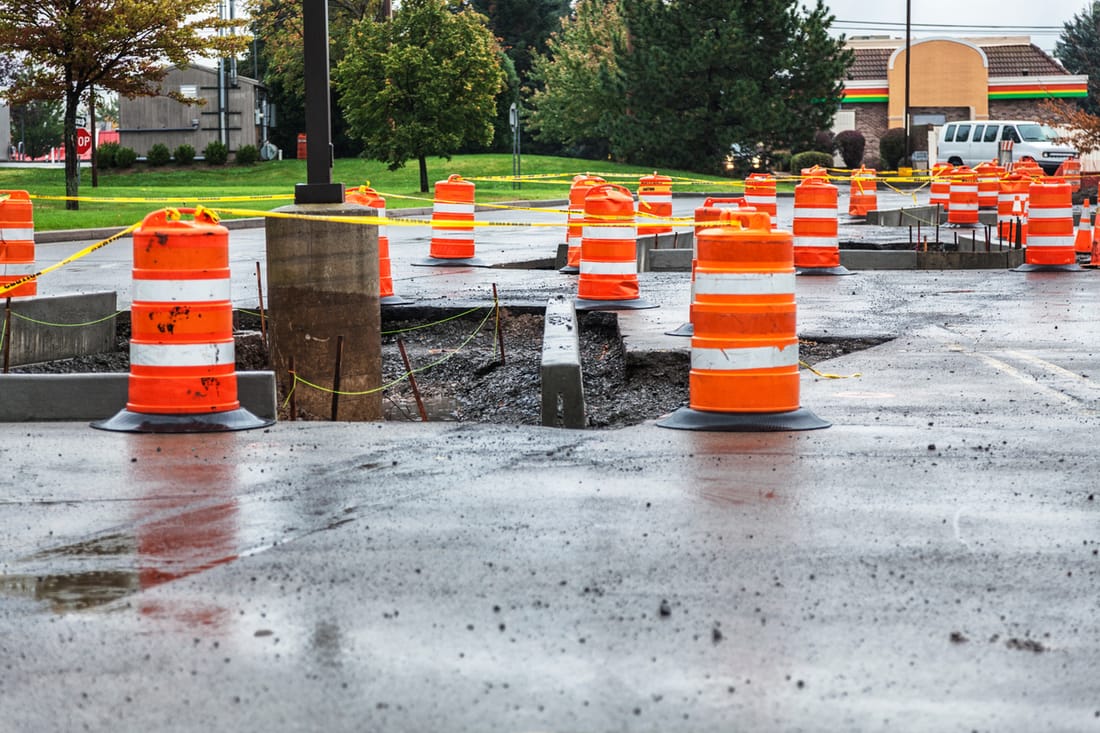
Notifications and site access: We recommend you notify tenants 7 to 10 days before work starts, including a simple map that shows which entrances or sections will be closed and when. We can provide that map and suggested wording if you like. On site, we set up cones, caution tape, and signs so drivers understand the new traffic pattern during the project.
During construction: You will see crews cleaning cracks, sawing or milling patches, compacting base, and placing hot mix asphalt. Fresh asphalt and crack seal need time to cool and set, so we will give you specific reopening times for cars and for heavier vehicles. In most cases, patched areas can open the same day. Larger overlays or replacements might need the following morning.
After the work: We walk the site with you to confirm that the repaired or new areas drain properly and meet your expectations. We can schedule striping after the asphalt has cooled and, for larger projects, talk with you about a maintenance plan that might include periodic crack sealing and sealcoating. In Tulsa’s climate, a little preventative care every couple of years can often add many more years to the life of your parking lot investment.