Home › Road, Street, and Municipal Paving
Our road paving services in Tulsa, OK cover subdivision streets, access roads, and municipal projects that demand durability and smooth travel. We manage grading, base construction, asphalt placement, and compaction to meet strict specifications. Contact us for a detailed bid on your road or street paving project today.
Precision Asphalt Tulsa provides professional road paving throughout Tulsa, OK, Oklahoma and the surrounding area. Our licensed, insured crew delivers safe, clean, on-time work with a free estimate before anything begins. Call (918) 703-4204 or request your free quote.
Road, Street, and Municipal Paving in Tulsa, Built for Real Traffic
When a public road fails in Tulsa, it is usually not just an inconvenience. It affects school bus routes, emergency response times, and daily commutes. Precision Asphalt Tulsa focuses on road, street, and municipal paving that holds up under our specific mix of heavy truck traffic, oil field service vehicles, and rapid freeze-thaw cycles.
Before we ever bring in equipment, we walk the entire route and document existing conditions. We look for drainage problems, rutting from truck lanes, soft shoulders, and any signs of base failure like alligator cracking or consistent depressions. We then compare what we see on site to traffic counts or expected usage so we can recommend the right pavement thickness and asphalt mix.
For city streets and county roads around Tulsa, we typically design different pavement sections for travel lanes versus parking or shoulders. Busier lanes might get thicker asphalt and a stiffer base, while low-speed residential streets can often use a more economical section. Our goal is not to oversell thickness, but to get the right structure so the surface will last a full life cycle with routine maintenance instead of constant patching.
Because local budgets are tight, we also look for ways to phase work to keep key routes open. That might be alternating lane closures, night or weekend work near high-traffic intersections, or sectional paving around schools to avoid peak drop-off and pickup times.
How Our Road Paving Process Works, Step by Step
On municipal and public road projects, the difference between a smooth, long-lasting surface and a problem job usually comes down to prep work and quality control. Here is how Precision Asphalt Tulsa typically handles a road paving project from start to finish.
First is evaluation and design support. We coordinate with your engineer or use your existing plans, then verify on site that the planned pavement structure makes sense given the soil and traffic. If we see signs of poor subgrade, we may recommend undercutting soft spots or using a stabilized base to prevent future rutting.
Next we move into milling, reclamation, or full-depth reconstruction. On overlay projects, we often mill 1 to 3 inches of old asphalt to remove ruts, improve curb reveal, and give the new mat a strong bond. On badly deteriorated rural roads, we may perform full-depth reclamation, which grinds up the existing asphalt and base, mixes it, and compacts it into a new stabilized base before placing fresh asphalt on top.
Subgrade and base preparation come next. We shape the road to the proper crown or cross-slope so water sheds toward ditches or storm inlets. We proof-roll with a loaded truck or roller to identify any areas that deflect more than they should. Soft areas are undercut and replaced with more suitable material. On new construction or major rebuilds, we install an aggregate base and compact it in thin lifts to achieve uniform density.
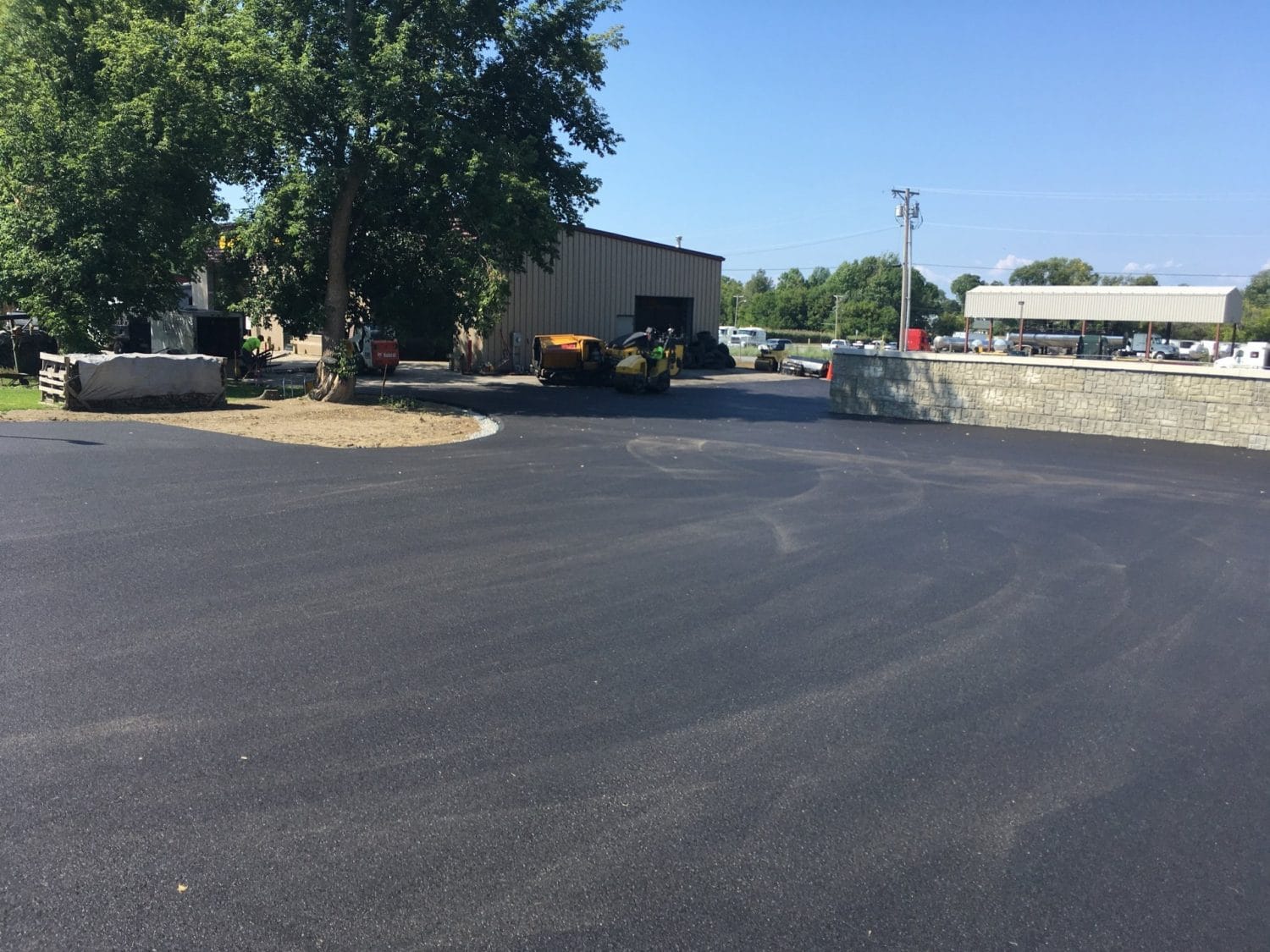
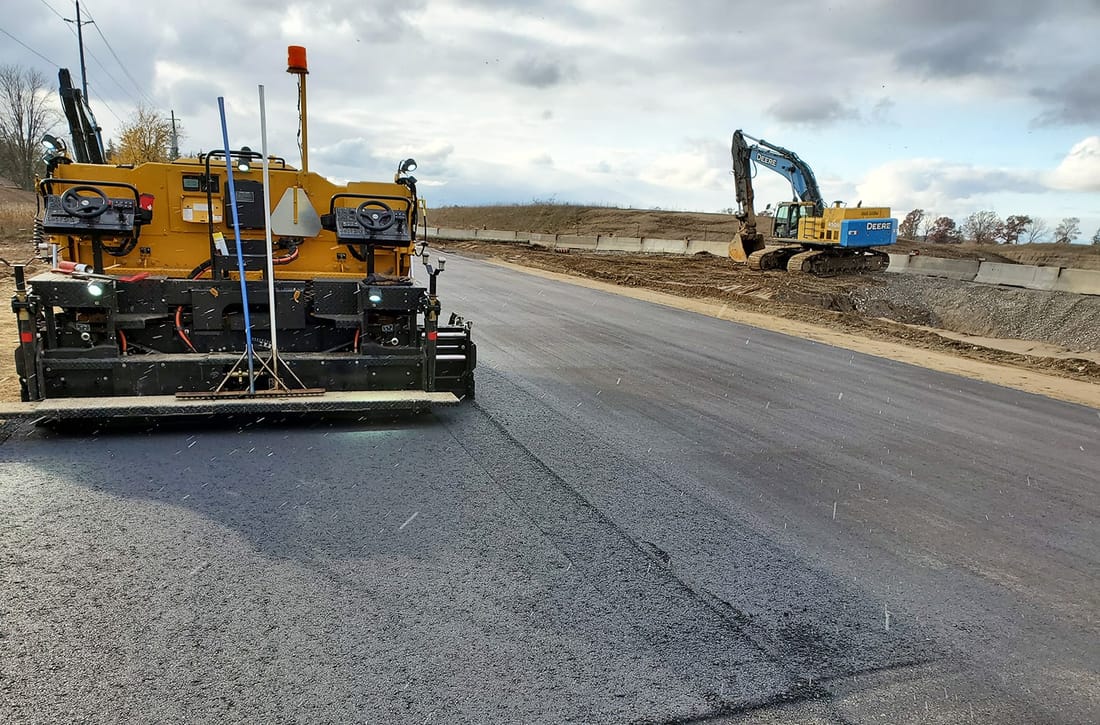
Then we pave. For road and street work in Tulsa, we usually place asphalt in two or three lifts: a base course, an intermediate or binder course, and a surface course. Each lift is laid at a controlled temperature, then compacted with a combination of breakdown, intermediate, and finish rollers to reach the target density. Joints are staggered and matched carefully so you do not feel a bump every time your tires cross a lane line.
Finally, we handle finishing touches and quality checks. This includes verifying cross slope, checking smoothness with a straightedge, addressing any segregation or soft spots while the mix is still workable, then coordinating striping and traffic control removal. We can also provide core samples or density test reports when required by city or county specs.
Material Choices and Design Options for Tulsa Streets
The right asphalt mix for a rural chip-and-seal road outside Tulsa is not the same as what you want on a downtown collector street. Precision Asphalt Tulsa helps cities, HOAs, and facility managers choose options that match how the road is actually used.
For residential streets that see mainly cars and light trucks, we often use a standard hot mix surface with a fine aggregate blend to resist raveling and provide a quiet, smooth ride. In cul-de-sacs where turning movements are tight, we may upgrade the binder content or recommend a slightly thicker surface course to minimize scuffing and shoving from garbage trucks and delivery vehicles.
On bus routes, industrial streets, and farm-to-market connectors that carry a high percentage of heavy loads, we typically recommend a thicker structure with a more robust base course. This might include a larger aggregate base mix for the first lift, followed by a tighter surface mix that resists rutting. Where tanker trucks or loaded semis are common, we often suggest modified binders that perform better in summer heat to prevent wheel-path depressions.
For municipalities trying to stretch a limited budget, we can also talk through surface treatment options for lower-volume roads. Examples include asphalt overlays on top of existing chip seal, micro-surfacing, or targeted patching followed by a thin lift overlay instead of a full-depth rebuild. We will explain the tradeoffs: shorter life but lower cost now, versus higher upfront investment with less maintenance over the next 15 to 20 years.
Drainage-related options matter as well. On streets that chronically pond water, we might recommend minor grade adjustments, additional inlets, or even edge drains in certain soils. In areas with clay subgrade, we often pay extra attention to base thickness and compaction so the new pavement does not start to crack from moisture-related movement.
Every option we present is framed around what you care about most: how long the road has to last, how much maintenance your crew can handle, and what kind of traffic it actually carries.
What Drives Road Paving Costs in Tulsa (And How to Control Them)
Public officials and property managers in Tulsa ask us the same thing all the time: What is really driving this road paving cost, and what can we do to keep it reasonable without cutting corners that matter? Precision Asphalt Tulsa is straightforward about the major cost factors and where you have room to adjust.
Project size and layout are big drivers. A long straight section of county road is more efficient per lane mile than a short, curb-and-gutter city block filled with manholes, inlets, and tight radii. Frequent driveways, intersections, and patches of handwork around utilities add labor and slow production, which increases unit prices.
Existing pavement condition is another key factor. If we can simply mill and overlay, you avoid the cost of excavation and new base. If the base is failed or the subgrade is pumping water, we have to fix that or the new asphalt will not last, and that adds cost now but prevents expensive failures later.
Material choices influence the budget but also long-term performance. A thicker pavement structure or higher-performance mix might cost more upfront, yet it can reduce the need for patching and overlays over the next decade. We often show options in a good, better, best format so city staff or boards can see how changing thickness or mix type affects both initial and life-cycle costs.
Access and traffic control are cost factors that get overlooked at the planning stage. Working on a busy arterial near downtown Tulsa with strict lane closure windows is very different from a rural section road. Night work, off-duty officers, special detours, and complex phasing all impact the final price. When we are involved early, we can suggest staging approaches that reduce traffic control time and cost while still keeping the public safe.
Finally, timing and coordination matter. If your city or HOA can group several blocks or segments into one project instead of piecemeal repairs, you gain efficiency in mobilization and material delivery. We encourage clients to use pavement condition surveys or simple windshield inspections to plan 3 to 5 years out, so we can bundle work and keep unit prices as low as practical.
Common Road Problems in Tulsa and How We Fix Them
Tulsa area roads see a unique combination of heat, sudden cold snaps, and heavy vehicles. Precision Asphalt Tulsa has dealt with the same recurring problems across city streets, county roads, and private developments, and we approach each one with specific repair methods instead of one-size-fits-all patching.
Rutting in wheel paths is very common on truck routes and bus-heavy corridors. When we see shallow ruts with an otherwise sound base, a mill-and-fill approach is often enough. We mill out the rutted zone, replace it with a rut-resistant mix, and compact properly. If the rutting is deep and the base is distorted, we cut out full-depth sections and rebuild the structure underneath before placing new asphalt.
Alligator cracking and widespread fatigue usually indicate base or subgrade failure. Throwing a thin overlay on top will only hide the issue for a short time. In these cases, we isolate the worst segments, excavate to stable material, and rebuild with new aggregate base and thicker asphalt lifts. Sometimes we pair this with drainage improvements to keep water from saturating the base again.
Edge failures are a frequent problem on rural roads around Tulsa where there is no curb and the shoulder is soft. Vehicles that run off the edge break the unsupported asphalt and the damage creeps inward. Our fix usually includes widening the paved section or armoring the edge with compacted aggregate or asphalt so traffic does not undermine the pavement.
Potholes and localized patches are unavoidable in older pavements, but how they are repaired matters. We focus on square cuts, clean edges, proper tack coat, and compacting the patch in thin lifts so it bonds with the existing road instead of popping loose. When a street starts needing repeated pothole repairs in multiple locations, we will tell you honestly when it is time to shift from patching to resurfacing.
We also help cities and HOAs set up practical maintenance plans. That might mean crack sealing on a 3 to 5 year cycle for key streets, timely overlays before the base is exposed to moisture, or converting low-volume paved roads that are too far gone into a chip-and-seal program until full reconstruction is affordable.